A real bookshelf
Point TuxBooks at a folder of EPUB and PDF files, and every book shows up with its cover and details. Group books into collections, and track what you are reading and what you finished.

v0.1.10 · no duplicate cards after a sync merge
TuxBooks is a local-first, bookshelf-style ebook library and reader for Linux. Point it at a folder of EPUB and PDF files. It indexes your library, remembers where you stopped reading.
Pre‑1.0 software, still changing fast. There is no data‑compatibility promise yet. A release can change the library database.
Download for Linux Build from source
Free software under GPL‑3.0 · Local-first
TuxBooks is local-first: your library and reading data live on your machine.
Point TuxBooks at a folder of EPUB and PDF files, and every book shows up with its cover and details. Group books into collections, and track what you are reading and what you finished.
Choose your font, text size, and line spacing for EPUB. Read PDFs with zoom, fast scrolling, and a dark mode that keeps photographs in color.
The PDF engine is new. Wheel and pinch zoom keep the point under your cursor in place, deep zoom stays sharp, and the page stays visible while the next render loads.
Every book remembers your place. Close the app mid-chapter, come back tomorrow, and you are on the same page, in EPUB and PDF alike.
Search your whole library with a keyboard shortcut, or search inside the book you are reading and jump to the match.
Bookmark a page, highlight a line in color, or attach a note. It all waits in the sidebar next time you open the book.
Screenshots from recent development builds.
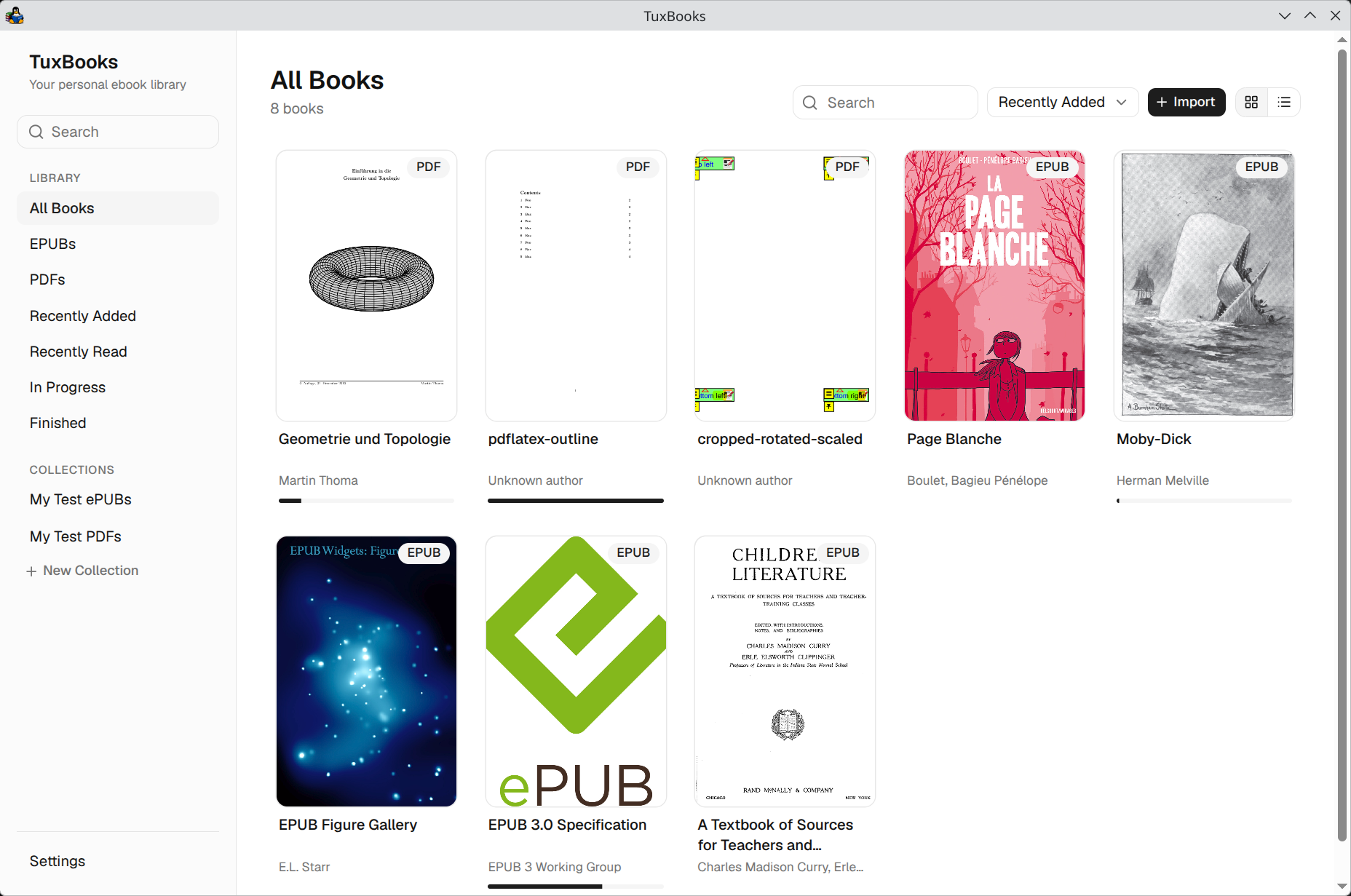
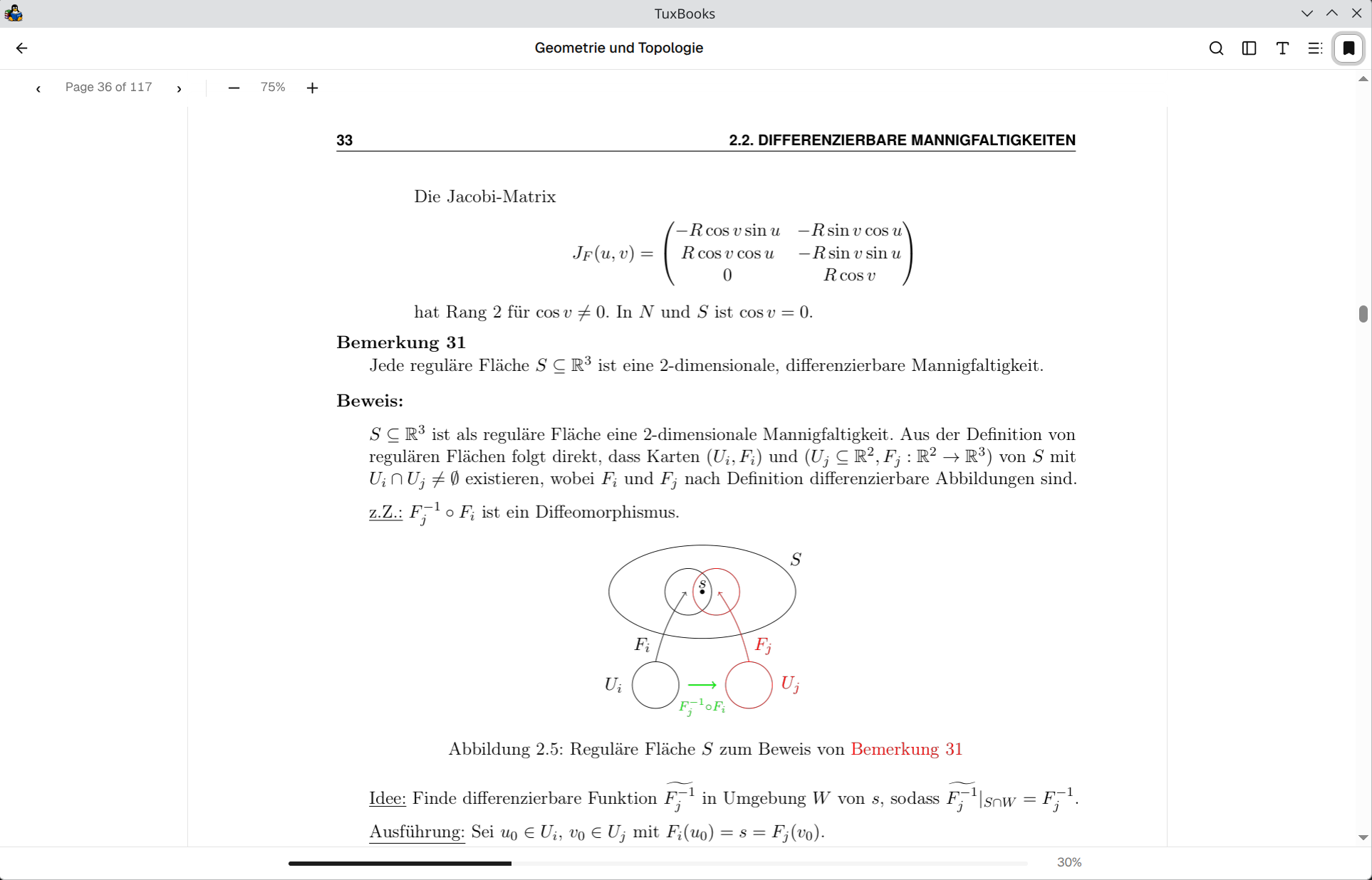
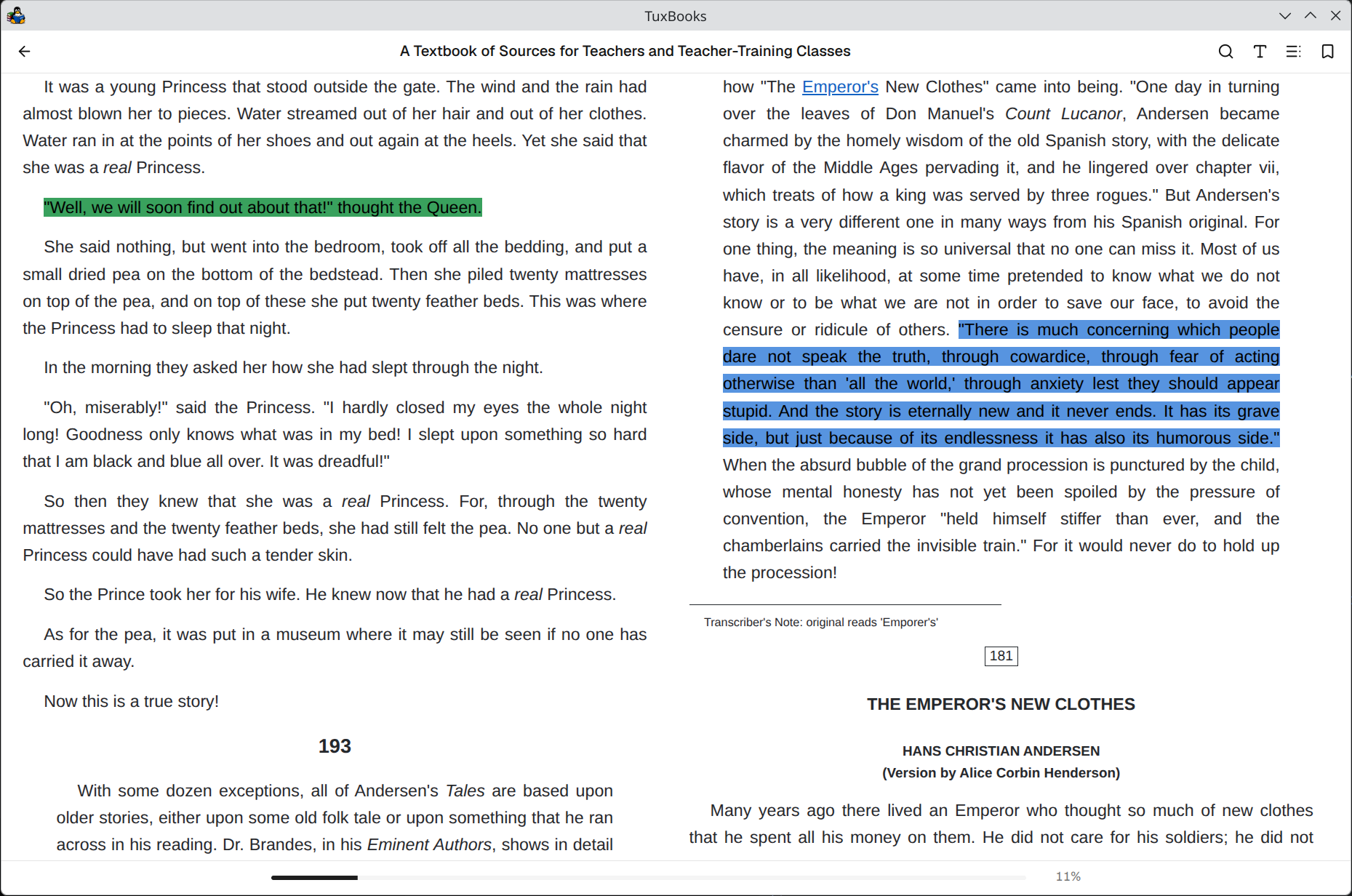
TuxBooks shipped 0.0.1 in September 2026 and 0.1.0 in October 2026. The core is in place: a local-first library and readers for EPUB and PDF. The project is young and moving fast, so releases may change stored data before 1.0. The next work is reliability and polish, not new features. The full roadmap lives in ROADMAP.md.
Three pieces of work come next:
Once syncing, architecture, and performance settle, development can move toward larger features. These directions are open, not committed:
The roadmap is a plan, not a promise. Quality comes before feature count.